It’s Google’s world.
They’re just nice enough to let us live in it.
When Larry Page and Sergey Brin launched Google out of a dorm room in 1998, they had no idea that it would one day employee 32,000 people, process one billion searches a day, and earn over US$30 billion a year.
What they had, instead, were some very non-traditional thoughts on how to run a business.
Rule #1: Stay Simple
Google’s home page is a perfect example of the company’s commitment to simplicity.
For Google, simple means faster, easier to use, and higher quality.
That’s why software developers who work at Google are taught that the best products “include only the features that people need to accomplish their goals.” When they’re creating a new product, they don’t try to stuff it full of as many features as possible.
“Simplicity is powerful.”
Google Company Philosophy
What a Tangled Web We Weave…
For some reason, it’s human nature to make things more complex than they need to be. As a writer, I’m always resisting the temptation to use long words and complex sentences.
But simple writing is usually more effective – and the same goes for business models.
Rule #2: Collaborate
The first day Larry Page met Sergey Brin, they got into a long argument. According to Page, they “both really disliked each other.”
But their studies at Stanford soon led them to respect one another as intellectual peers. It was this mutual respect that brought them together in 1995 to collaborate on Page’s doctoral thesis: an algorithm that could rank websites based on their shared hyperlinks.
Even though it was Page’s idea (hence the name PageRank), he couldn’t have created the algorithm without the mathematical wizardry of Sergey Brin. Without a math prodigy like Brin on board, Google might have been just another thesis.
It was the joining of two very strong brains and personalities that made the algorithm what it was: a search engine so effective that it put Lycos and Excite to shame.
Google’s PageRank system rocket-propelled Page and Brin to the top of the upper echelons of Silicon Valley. Suddenly, their little search algorithm was duking it out with industry titans like Yahoo! and Microsoft… and winning.
Part of the reason for Google’s success was the collaboration they encouraged among their employees. Since the beginning, they’ve implemented something called open source software development, “where innovation takes place through the collective effort of many programmers.”
But as the company grew even larger, Page and Brin realized that they had to bring another brain into the trust: this time, someone who could lead Google as a corporation and offer the boys “adult supervision.” In 2001, they hired Eric Schmidt as CEO and began running Google as a triumvirate. Schmidt started running Google like a business – and acquired YouTube in the process.
Even though Schmidt has since stepped down as CEO, he still serves as Google’s executive chairman, and Google continues to emphasize a spirit of collaboration in all they do.
Going it alone?
Having a partner to collaborate with isn’t a requirement. Many very successful businesses are founded, owned, and operated by one person.
With that said, two complementary business partners will motivate one another, brainstorm innovative ideas together, and each allow the other to do what they’re best at.
I can speak from personal experience on this subject. My business partner has been absolutely essential to our company’s success and I feel thankful for him daily.
Rule #3: Great Just isn’t Good Enough
“We see being great at something as a starting point, not an endpoint.”
Google Company Philosophy
When Google launched its search engine in 1998, it was already great. The PageRank algorithm was simply better than the competition, which focused too much on words and often returned irrelevant results.
It was this greatness that allowed Google to grow without spending millions on a marketing campaign like Yahoo! and Ask Jeeves. Google was so great that it spread almost entirely by word of mouth.
But great wasn’t good enough. Google believes, “It’s best to do one thing really, really well.” So, instead of spreading out into different industries, the company kept perfecting their search engine.
“The ultimate search engine would basically understand everything in the world, and it would always give you the right thing. And we’re a long, long ways from that.”
Larry Page
The above quote is from 2004, by which point Google had cemented their position as market leader. Not only were they the world’s top search engine, they were about to unleash their IPO to a market capitalization of a cool US$23 Billion.
But even at that point, Larry Page was not ready to rest on his laurels. As he said, they were a “long, long ways” from where they wanted to be.
Thanks to this attitude, Google has been churning out big improvements to its search engine year after year. Innovations (i.e. the spelling suggestions Google gives you when you misspell a word) are a big part of the reason they’re still the world’s top search engine.
How Can You Improve?
Rule #4: Give Value for Free
“Our goal is to develop services that significantly improve the lives of as many people as possible.”
Larry Page and Sergey Brin
People don’t expect to have to pay for much of anything online. But that’s not a problem for Google, which offers more free value to their users than any other online company.
Just think of all of their free software and services: Gmail, Google Docs,
Google Analytics, Google Website Optimizer, Google Earth, Google Chrome… the list goes on and on.
Collectively, these products have cost Google millions and millions of dollars to develop. Some, like Gmail, generate revenue through advertising, but many do not make Google any money at all.
What they do is more important: build brand loyalty. Thanks to all they’ve given away, Google has an army of devotees eager to use their latest services, share them with their friends, and shell out cash when Google releases something that actually costs money (like a Chromebook).
Count me among the converts: I’ve been so impressed with Gmail and Google Chrome that I just assume everything Google does meets a high standard of quality.
Giving / Receiving
When people receive something of great value for free, it instills in them a sense of gratitude to the giver. It’s human nature to want to return the favor.
Start being more giving with your business and you will find that you’re getting more referrals, making more sales, and getting a warmer response on social networks.
Rule #5: Protect Your Market
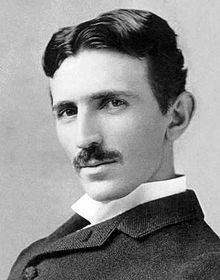
Nikola Tesla was one of the greatest inventors of his time. He laid the foundation for radio communication, wireless technology, and electric power. Without his advances, Google couldn’t exist.
Yet Tesla died with hardly a penny to his name.
When Larry Page read a biography of Tesla as a kid, he learned an invaluable lesson: protect what makes you valuable. This is an especially difficult task if your value comes from easy-to-steal ideas.
As CEO of Google, Page has been sure not to follow in Tesla’s footsteps. Google has kept a close guard on their big competitive advantage: the PageRank algorithm that Page and Brin had labored over as graduate students at Stanford University.
While Stanford actually owns the PageRank patent, Google bought the exclusive rights to use it for 1.8 million shares of stock (later sold by Stanford for $336 million).
No other company is able to use their patented method for ranking pages. That’s a big reason Google still sits at the top of the heap.
In recent years, Google has been more active working with the government to protect their interests. They spent about US$10 million on lobbying the US government in 2011 and took part in a successful campaign to deter the SOPA/PIPA legislation in January 2012.
How to Protect Your Big Idea
Every idea is different and there’s a good chance that yours won’t require a patent.
But that doesn’t mean you need to be telling your competition your secret formula:
“There are two rules for success. 1) Never tell everything you know.”
Roger H. Lincoln
Rule #6: No Hype Necessary
“Part of our brand is that we’re pretty understated in what we do. If you look at other technology companies, they might preannounce things, and it will be a couple years before they really happen, and they don’t happen in the way they said they would.
Google tends to release things without announcing them in beta, or whatever. We wait until they get really big and really good, then we start talking about them. And so that’s a really different way of doing business.”
Larry Page
Google doesn’t do hype. They let their innovative products and services speak for themselves.
I’ve met a lot of entrepreneurs who talk a big game. They’d have you believe that they’ve got all of the most important connections and that their next project is the next big thing. Talk to those same entrepreneurs in six months and chances are that last project fizzled out and they’re already onto talking up the next one.
Talk is cheap. It’s always better to let your accomplishments speak for themselves.
Three Good Reasons Not to Hype Yourself Up:
You Make a Stronger First Impression
Everybody knows how important first impressions are. When somebody’s first impression of your project is you talking about it before it’s ready, then you wasted that first impression on mere talk.
It’s tempting to tell all of your friends, relatives, and colleagues about your brilliant idea. But think about how much more powerful it will be if you wait until your project is completed, successful, and has a few mentions in the media.
Be patient – and wait until the time is just right to share your business with the world.
You Don’t Box Yourself In
Until a project is set in stone, it should always be evolving. Keeping quiet also allows you to be more versatile with your business.
If you realize that it would be better to evolve in a slightly different direction than you had initially planned, you don’t want to be constrained by the expectations of the people who already know your original plan.
You Increase Your Commitment
At a more personal level, talking up your plans too much can actually make you less likely to follow through with them.
When we tell someone what we hope to achieve, we feel some of the satisfaction of actually accomplishing that goal – and it actually makes us less hungry to pursue them.
Rule #7: Don’t Take Yourself Too Seriously
“You can be serious without a suit”
Google Company Philosophy
Google may be the world’s most powerful website, but that doesn’t mean they can’t have a little bit of fun. Since 2000, Google has been playing April Fool’s Day jokes on the world.
Their first prank was a new search feature called Google MentalPlex – which claimed to scan your “personal aura and brainwave activity” and then determine which website you were trying to reach.
In 2002, they “revealed” that their search results were determined by “data coops” full of trained pigeons. They’ve since announced job openings on the moon and unveiled a sports drink called Google Gulp. Sounds tasty.
Google’s actually ramping up their pranks. In 2011, they pulled a whopping 17 of them on April 1st.
Why does Google spend so much time joking around? The pranks earn Google plenty of press and a small bump in traffic. But more importantly, it brings a sense of fun and real personality to their brand – both for their users and for their employees.
Nobody Likes a Robot
When you interact with somebody online, they could be all the way on the other side of the globe. Just because you’re distant from one another, that doesn’t mean you have to act distantly.
Every website visitor, every Facebook sharer, and every email subscriber is a flesh-and-blood person, just like you. A personal touch goes a long way.
#8: Don’t Be Evil
“We have a mantra: don’t be evil, which is to do the best things we know how for our users, for our customers, for everyone. So I think if we were known for that, it would be a wonderful thing.”
Larry Page
In a 2004 meeting, Google employees were brainstorming an unofficial company motto. Suggestion after suggestion was met with little enthusiasm. Then one finally stuck: “Don’t Be Evil.”
Big companies like Google can often make more money in the short-term by taking advantage of their customers and employees, damaging the environment, or ignoring human rights. Google’s adoption of the “Don’t Be Evil” motto meant that they were committed to being a different type of company – one guided by a strong moral compass.
This philosophy has had a big impact on Google’s ad policy. Their search results only turn up relevant ads, clearly marked as “sponsored.” They also refuse to use pop-up ads or any other flashy ads that would interfere with “your ability to see the content you’ve requested.”
Google also does good through philanthropy. In 2004, they launched Google.org, a not-for-profit organization that looks to solve the problems of global health, poverty, and climate change.
“We believe strongly that in the long term, we will be better served – as shareholders and in all other ways – by a company that does good things for the world even if we forgo some short term gains.”
Larry Page and Sergey Brin
Still Not Evil?
Absolute power corrupts absolutely – and Google has become very, very powerful in the last few years. In 2009, Google quietly dropped “Don’t Be Evil” as their official motto.
That doesn’t necessarily mean that Google’s gone to the dark side. The slogan was simply attracting too much negative attention.
The company has drawn criticism for allowing their search results to be censored in China and for making a deal with Verizon that some journalists considered damaging to net neutrality.
Today, in 2012, Google is getting a ton of heat for their new privacy policy, which will allow the company to more easily merge personal information it has collected from across its many platforms. This means more powerful, targeted advertisements and more money for Google, but it also represents a new low in online privacy.
Do Good, Make Money
“You can make money without doing evil.”
Google Company Philosophy
We could argue all day about whether Google’s doing a good job of practicing what it preaches. It’s a worthwhile conversation to have, especially given than an immense amount of our personal data sits on Google’s servers.
But here’s something where, in my opinion, there’s no room for debate: doing good is good business.
It’s not just about being a better person or getting that warm, fuzzy feeling; businesses that do good are simply more likely to be successful in the long haul.
Do You Follow Google’s 8 Simple Rules?
Google’s principles are pretty idealistic. I think this explains why they’ve become so popular but also why they sometimes have trouble living up to their own values.
Take a moment to reflect on our own businesses. Are there any of the rules above that you think your business does a great job of embodying? Are there any areas where you think you could improve by being a little bit more like Google?
Personally, I see a lot of Google in my own business (an emphasis on collaboration and a daily desire to improve the service), but there’s still a lot for me to learn (keeping things simple and protecting my share of the market).
This article has left me more energized than ever to apply Google’s principles to my company and my website.
I hope it does the same for you. The more people who follow Google’s lead and create simple, collaborative, value-packed websites, the better off we’ll be

 This technique has the potential to send you far more than 100 visitors. When people use search engines to look for the questions you answered often times a Yahoo! Answers result will appear near the top of the search results. This will give you and your website a ton of exposure if you answer commonly asked questions!
 The 3 most popular social bookmarking sites are Digg, Reddit, and Delicious. These 3 sites get over 8 MILLION unique visitors a month – funneling off a chunk of that traffic to your website is very doable. (There’s plenty to go around ) Just remember to create content that people will enjoy and/or find useful. The most popular content on social bookmarking sites are usually check lists, “Top 10” lists, tools & resources, and breaking news – so keep that in mind!
 Creating a lense or two is one of my favorite ways to get laser targeted traffic without hours of work.
 Find the forums in your industry with the largest user base, start posting there and become an active community member. Most forums will allow you to leave a link to your website in your post signature, so the more you post the more traffic you get.
 For example if I write an article about SEO and Google I can tag the end of the tweet with #SEO #Google and anyone that searches for those keywords on Twitter can see my tweet about the post that I wrote. Be sure to write creative headlines for your posts so people feel the urge to click on them.
 The same rule applies here: don’t be boring – be creative and interesting and use common keywords in your article and title so website owners can find it!







 :.
:.


